




-
Introduction
Lindsay Diehl
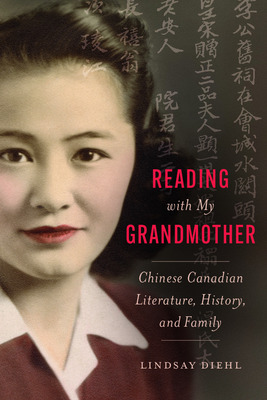
This is the introductory chapter of Reading With My Grandmother: Chinese Canadian Literature, History, and Family by Lindsay Diehl.
Reading With My Grandmother is an analysis of a range of Chinese Canadian literature that deepens the scholarly engagement by using elements of the author’s family’s story—her grandmother’s letters and photographs.
This engagement allows the author to simultaneously illustrate and participate in the varied ways Chinese Canadian literature has been imagined and produced in Canada in the last thirty-five years, examining texts such as Fred Wah’s biotext Diamond Grill (1996), Judy Fong Bates’ memoir The Year of Finding Memory (2010), and Paul Yee’s novel A Superior Man (2015). In keeping with recent calls within Asian Canadian studies for innovative creative-critical methods, the author establishes a scholarly style that embraces subjectivity and demonstrates a dynamic method of revealing linkages and discontinuities between past and present Chinese Canadian writing.
Drawing on literary works and inherited stories, the author considers how family narratives give voice to otherwise muted and traumatized experiences, and how they require readers to question dominant versions of Canada’s past to make room for more perspectives. The author also examines the ways such stories can be restricted by readerly expectations for narrative completeness. In navigating these concerns, she explores concerns of connection, community, and identity that have national, gendered, and racialized implications.
-
Introduction
Dominic Davies and Candida Rifkind
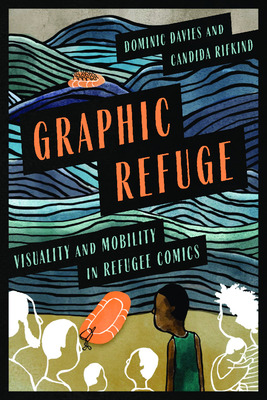
This is the introductory chapter of Graphic Refuge Visuality and Mobility in Refugee Comics by Dominic Davies and Candida Rifkind.
Graphic Refuge is the first in-depth study of comics about refugees, asylum seekers, migrants, and detainees by artists from the Global North and South. Co-written by two leading scholars of nonfiction comics, the book explores graphic narratives about a range of refugee experiences, from war, displacement, and perilous sea crossings to detention camps, resettlement schemes, and second-generation diasporas.
Through close readings of work by diverse artists including Joe Sacco, Sarah Glidden, Don Brown, Olivier Kugler, Jasper Rietman, Hamid Sulaiman, Leila Abdelrazzaq, Thi Bui, and Matt Huynh, Graphic Refuge shows how comics challenge dominant representations of the displaced to bring a radical politics of refugee agency and refusal into view. Beyond simply affirming the “humanity” of the refugee, these comics demand that we apprehend the historical construction of categories such as “citizen” and “refugee” through systems of empire, settler colonialism, and racial capitalism. The comics medium allows readers not only to visualize the lives of refugees but also refocuses the lens on citizen non-refugees—“we who can sleep under warm cover at night”, as Vinh Nguyen writes in his foreword—and interrogates their perceptions, aspirations, and beliefs.
-
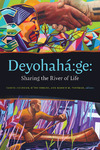
Introduction
Daniel Coleman, Ki'en Debicki, and Bonnie M. Freeman
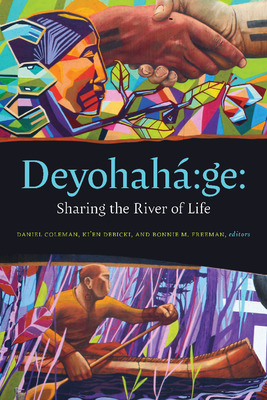
This is the introductory chapter of Deyohahá:ge:: Sharing the River of Life, edited by Daniel Coleman, Ki'en Debicki, and Bonnie M. Freeman.
Deyohahá:ge:, “two roads or paths” in Cayuga language, evokes the Covenant Chain-Two Row Wampum, known as the “grandfather of the treaties.” Famously, this Haudenosaunee wampum agreement showed how Indigenous people and newcomers could build peace and friendship by respecting each other’s cultures, beliefs, and laws as they shared the river of life.
Written by members of Six Nations and their neighbours, this book introduces readers not only to the 17th-century history of how the Dutch and British joined the wampum agreement, but also to how it might restore good relations today. Many Canadians and Americans have never heard of the Covenant Chain or Two Row Wampum, but 200 years of disregard have not obliterated the covenant. We all need to learn about this foundational wampum, because it is resurging in our communities, institutions, and courthouses—charting a way to a future.
The writers of Deyohahá:ge: delve into the eco-philosophy, legal evolution, and ethical protocols of two-path peace-making. They tend the sacred, ethical space that many of us navigate between these paths. They show how people today create peace, friendship, and respect—literally—on the river of everyday life.
-
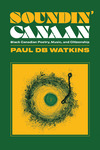
Overture: DJ Methodology: Resounding the Past
Paul db Watkins
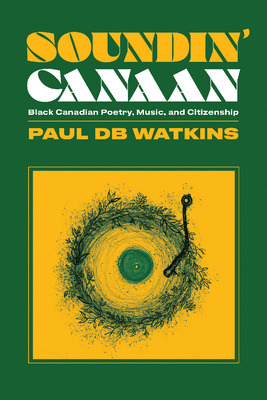
"Overture: DJ Methodology: Resounding the Past" is the introductory chapter to Soundin' Canaan: Black Canadian Poetry, Music, and Citizenship by Paul db Watkins.
Part exploration of a key group of Black Canadian poets, part literary, cultural, and musical history, Soundin’ Canaan demonstrates how music in Black Canadian poetry is not solely aesthetic, but a form of social, ethical, and political expression.
Soundin' Canaan refers to the code name often used for Canada during the Black migration to Canada. The book analyzes the contributions of key Black Canadian poets, including their poetic styles and their performances. The book has several key objectives, including recuperating the collision of the historical and the Biblically derived figure of Canaan, the promised land of freedom and security for an African American population seeking to leave the shackles of slavery behind and the northern terminus of the underground railroad. Centering around the poetry of George Elliott Clarke, Dionne Brand, M. NourbeSe Philip, Wayde Compton, and rapper K’naan, it delves into how these poets draw inspiration from African American and Afro-diasporic musical genres, such as blues, jazz, reggae and dub, hip-hop, and remix, to reshape the notions of identity and citizenship. Soundin' Canaan asks: what does Canadian citizenship sound like, especially when voiced by Black Canadian poets who embrace a fluid and multicultural form of citizenship that moves between local and global spaces, much like music does?
Using a DJ Methodology, the author mixes in close readings of poetry, music, cultural and literary history, as well as various interviews with the poets. The book includes an accompanying soundtrack to further enhance the reading experience. Listening to the poets in this book—that is in listening closely to the poems, sounds, and musical samples they bring into the mix—constitutes “sonic citizenship.” This co-performative act of reading, listening, and sounding serves as a reminder of how citizens inhabit and negotiate life in Canada beyond the formal legal framework of the nation-state.
-
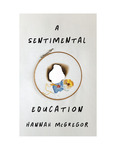
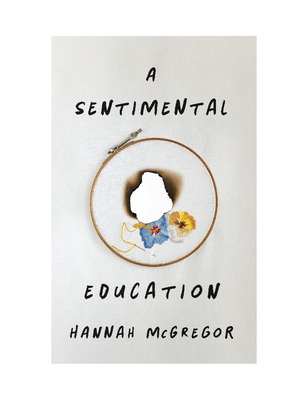
A Sentimental Education
Hannah McGregor
How do you tell the story of a feminist education, when the work of feminism can never be perfected or completed? In A Sentimental Education, Hannah McGregor, the podcaster behind Witch, Please and Secret Feminist Agenda, explores what podcasting has taught her about doing feminist scholarship not as a methodology but as a way of life.
Moving between memoir and theory, these essays consider the collective practices of feminist meaning-making in activities as varied as reading, critique, podcasting, and even mourning. In part this book is a memoir of one person’s education as a reader and a thinker, and in part it is an analysis of some of the genres and aesthetic modes that have been sites of feminist meaning-making: the sentimental, the personal, the banal, and the relatable. Above all, it is a meditation on what it means to care deeply and to know that caring is both necessary and utterly insufficient.
In the tradition of feminist autotheory, this collection works outward from the specificity of McGregor’s embodied experience – as a white settler, a fat femme, and a motherless daughter. In so doing, it invites readers to reconsider the culture, media, political structures, and lived experiences that inform how we move through the world separately and together.
-
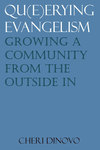
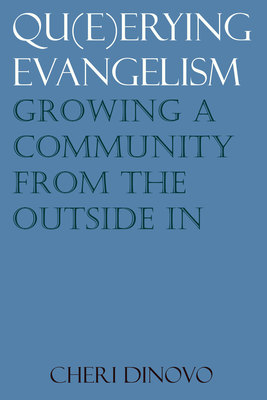
Qu(e)erying Evangelism: Growing a community from the outside in
Cheri DiNovo
“Qu(e)erying Evangelism: Growing a Community from the Outside In” is a look at the true meaning of evangelism. Evangelism is not growth or marketing and is not the ‘work’ of Christians converting others but instead is the calling of those who have been ‘othered’ converting those inside Churches. It is the act of the Divine through the marginalized from the outside/in.
The ‘others’ include 2SLGBTQ who have been, in many instances, abandoned by Churches. It gives the example of both a Church in downtown Toronto, the site of the first legalized same sex marriage in Canada and of Riverside Church in New York City.
Written by Order of Canada recipient Rev. Dr. Cheri DiNovo and winner of the Lambda Award for Religion and Spirituality in 2005, it argues that inclusion is the truly biblical call upon all Christians.
-

A Guide to Academic Podcasting
Stacey Copeland and Hannah McGregor
THIS GUIDEBOOK is an open educational resource for current and future Amplify podcasters, and anyone interested in how to approach academic podcasting. What is academic podcasting? And why might you want to start an academic podcast in the first place? Academic podcasting is the communication of scholarly knowledge through the digital medium of podcasting. Podcasting can take on many forms, including interviews, audio documentary, fiction, or experimental sound forms. Podcasting can be a radical, open, and subversive way of creating publicly accessible and community engaged scholarship. We hope you’ll find this guidebook useful in the classroom, in the studio, and even at home, alongside your cup of morning coffee. Think of this as an invitation into the world of academic podcasting that you can return to time and time again throughout the development of your podcast. While this guidebook is far from exhaustive, we hope it will offer you a selection of best practices, templates, and resources that will benefit seasoned producers and podcast newcomers alike
-

O! Call Back Yesterday
Joy Trott
When VE Day was announced in 1945, twenty-one year old Joy Trott was halfway across the Atlantic Ocean with a newborn daughter who had yet to meet her father. Armed with a trunk and a pram, Joyce embarked on a new life alongside her Canadian husband.
In her memoirs, Trott recounts her early childhood in Depression-era Great Britain and the death of her parents, her life as a teenaged volunteer in the Auxiliary Territorial Service of the British Army, and her immigration to Canada as a young war bride. Interwoven into this personal narrative are anecdotes and reflections on class, race, sexuality, and war.
O! Call Back Yesterday is a unique blend of autobiography and social commentary told with humour and sincerity. This book provides insight into the lives of women in the early twentieth century and will appeal to those interested in women’s studies and social history.
Printing is not supported at the primary Gallery Thumbnail page. Please first navigate to a specific Image before printing.